Some of the best ideas I’ve ever had as a parent came from pure survival instinct.
Summer stretched out in front of us—long, unstructured, and full of children who needed something to do with their hands and their brains—and I needed a plan. What I didn’t expect was that the simple solution I landed on would stick with my kids long after the summer ended.
I called it Cooking Camp, though that makes it sound more organized than it really was.
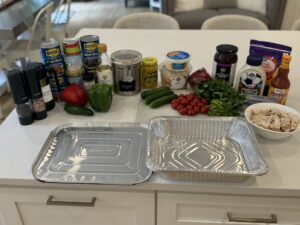
The premise was simple: each child got a night to be the head chef, a grocery budget (about $25-$35 for our family of 6), and complete control of dinner. They planned the menu, wrote the grocery list, went to the store, and cooked the meal. If they came in under budget, whatever was left was theirs to keep—for a treat, for savings, or for whatever they wanted.
No strings attached.
That last part, it turned out, was everything.
Why It Works
There’s something that happens when you hand a ten-year-old real money and real responsibility.
They stand up a little straighter in the grocery store. They read price tags. They compare brands. They do the math in their heads—or on their fingers—or by asking for your phone’s calculator while they decide whether the fancy cheese is worth it.
For one afternoon, they are completely in charge of something that matters.
My kids were in late elementary and early middle school when we started this, and the range of personalities it revealed was remarkable.
Some spent every last dollar on the meal they had envisioned, refusing to compromise on a single ingredient.
Others became tiny economists, swapping chicken breasts for thighs, choosing the smaller block of parmesan, and pocketing the difference with enormous satisfaction.
Both approaches were completely valid.
Both taught them something real.
The menus were wonderfully them. Pasta. Chicken parmesan. Stir Fry. Favorite family meals they were excited to make with their own hands. The goal was never culinary perfection. The goal was ownership.
And they rose to it every single time.
How to Run Your Own At-Home Cooking Camp
The beauty of this idea is that it requires almost no setup.
1.) Set the Budget
We found $25–$35 per meal hit the sweet spot—generous enough to make a real dinner for the family, but tight enough to make the choices meaningful.
Adjust the amount based on your family size and budget.
2.) Let Them Plan Completely
Resist the urge to steer the menu.
If they want tacos three weeks in a row, tacos it is.
The ownership is the point.
3.) Go to the Store Together
This is not a drop-off errand.
Walk the aisles with them. Let them navigate. Let them compare prices. Let them make decisions.
These days, online grocery ordering is another great option, especially for older kids. They can compare prices, build a cart, and stay within a budget without ever leaving home. Truly, I would have given my left foot for grocery delivery when my four kids were little! But if your schedule allows, I’d still encourage at least one trip to the store together. It’s where so much of the learning happens. Walking the aisles, comparing prices, spotting sales, making substitutions, and deciding what stays in the cart are lessons that are hard to replicate online. Both are valuable experiences, and each teaches something a little different. If you can, I’d encourage you to try both!
Answer questions, but don’t solve problems.
If they realize halfway through the store that they can’t afford both the fancy cheese AND dessert, let them figure that out.
That’s where the learning happens.
One unexpected benefit was that grocery shopping became something I actually looked forward to.
When my kids were little, taking everyone to the grocery store could feel like an Olympic event. But Cooking Camp changed that. Instead of trying to keep several children entertained while I hurried through my list, I was focused on just one child and their dinner plan.
We compared prices, talked through decisions, celebrated finding a bargain, and laughed our way through the store. What had once felt like another errand became an opportunity for one-on-one time.
With four kids, those little moments of individual attention didn’t happen nearly as often as I would have liked. Looking back, some of the best conversations happened somewhere between the produce aisle and the checkout line.
4.) They Cook, You Assist
Age-appropriate guidance is fine, but the stirring, seasoning, measuring, and plating should be theirs.
Stay nearby.
Stay safe.
Stay out of the way.
5.) Honor the Savings
Whatever comes home in change belongs to them.
This is not symbolic.
It is not negotiable.
It is the entire lesson.
The Summer Cooking Camp Challenge
To keep things simple, these were our basic rules:
1. You plan it.
2. You shop it.
3. You cook it.
4. You feed everyone.
5. The budget is the budget.
6. Savings are yours.
7. Clean up is part of the job.
Simple enough for kids to understand.
Powerful enough to teach skills they’ll use for life.
What They Actually Learned
Yes, they learned how to cook.
But they also learned how to:
● Plan a meal
● Read and follow a recipe
● Build a grocery list
● Compare prices
● Stay within a budget
● Make decisions under constraints
● Feed other people
They learned that cooking isn’t nearly as intimidating as it looks.
They learned that cheaper ingredients can still make excellent food.
They learned that sometimes the best choice isn’t the most expensive one.
Most importantly, they learned there is a special pride that comes from setting a dish on the table and watching your family enjoy something you created yourself.
Looking back, I don’t think Cooking Camp was really just about teaching my kids to cook. It was about teaching them confidence. They learned how to plan, solve problems, work within a budget, and create something that brought other people together.
Once after cooking camp, a friend told me that my son had prepared food while he was visiting their house. She mentioned how impressed she was and asked where he had learned to do that.
His response made me smile:
“Well, you know, when your mom cooks a lot, you kind of pick some of it up.”
At the time, he was only about ten years old.
The funny thing is, I don’t think he realized just how much he had picked up. Cooking Camp taught budgeting and planning, but it also gave my kids confidence in the kitchen and the belief that they were capable of figuring things out for themselves.
Today, both of my sons are grown and living on their own. They still cook regularly, and I love getting text messages with photos of whatever they’re making that week. This past Valentine’s Day, both of them cooked dinner for their girlfriends, and I couldn’t help but smile when I saw their photos because I could trace it all the way back to those summer evenings around our kitchen table.
Just the other day, my sixteen-year-old brought Cooking Camp up completely on her own and asked if we could do it again this summer. This time, she was excited to note, they can even drive themselves to the grocery store.
Some traditions are worth bringing back.
Free Summer Cooking Camp Printable Packet
To make it easy to start your own Cooking Camp, I’ve created a set of free printables you can download and use with your kids:
● Summer Cooking Camp Budget Planner
● Summer Cooking Camp Challenge Rules
● Certified Family Chef Certificate
Download your free printable packet here!
Whether you use them exactly as written or adapt them to fit your family, I hope they help create a summer your kids (or grandkids) will remember—and practical life skills they’ll carry long after summer ends.
And if you’re looking for some fun kids’ cooking items like chef’s hats, aprons, and tools, I have some ideas from Amazon here!
Bon appétit!