This post may contain affiliate links. I may earn a small commission at no cost to you.
I’ve tried sourdough before and it didn’t go well. I followed the steps, I read the articles, I thought I understood the process and still it just…didn’t work. It was the type of failure where you throw it away without telling anyone and decide maybe you’re just not a sourdough person.
So when my niece, newly married in her mid 20s, confidently handed me a jar of starter and offered to walk me through it, I had a moment. I am not, by nature, someone who needs a lot of guidance. I like to figure things out. I like to be capable. I like to be the one people come to, not the one asking questions. And yet, there I was, standing in my kitchen, taking instructions from someone a full generation behind me. I found it a little uncomfortable. And kind of wonderful.
And this time it was different. I followed her lead. I asked questions. I resisted the urge to rush or improvise or assume I knew better. I paid attention in a way I probably hadn’t the first time, and slowly, it started to come together.
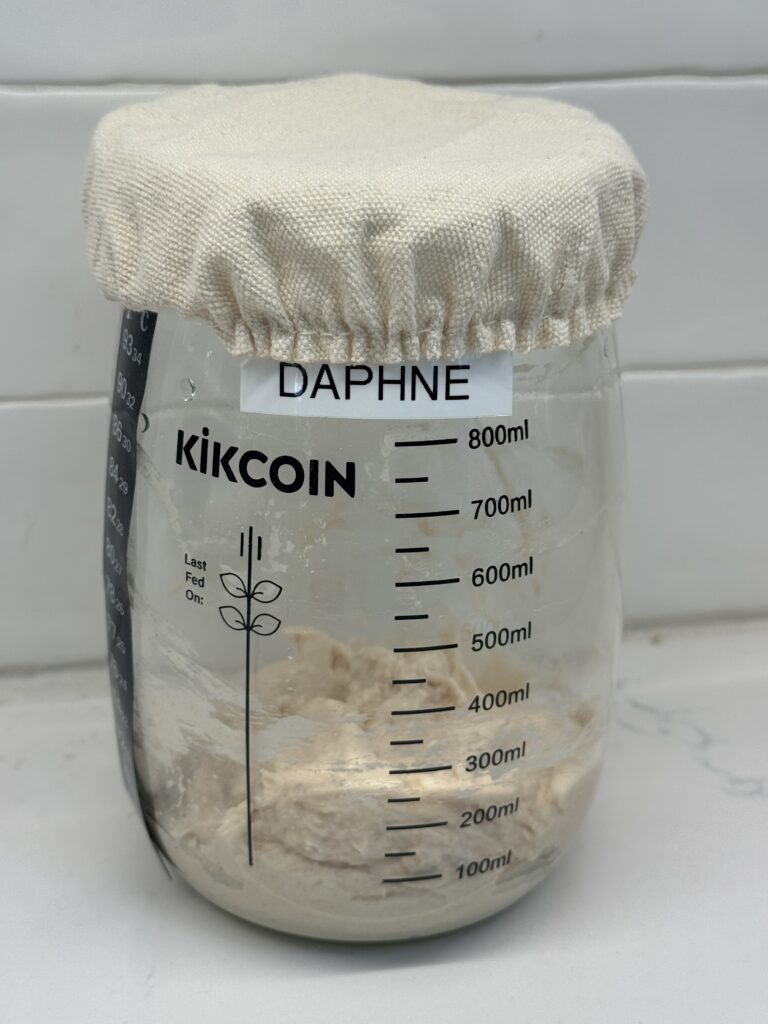
The starter (named Daphne) was bubbly and grew when I fed her. I ordered a kitchen scale because my niece uses one and I was determined to copy her exactly! I felt like a scientist in my little lab, harking back to the days of childhood making mud pies in the backyard and imaginary kitchen concoctions of soap and shampoo in the bathtub.
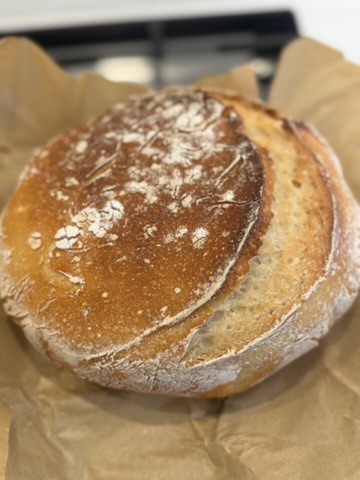
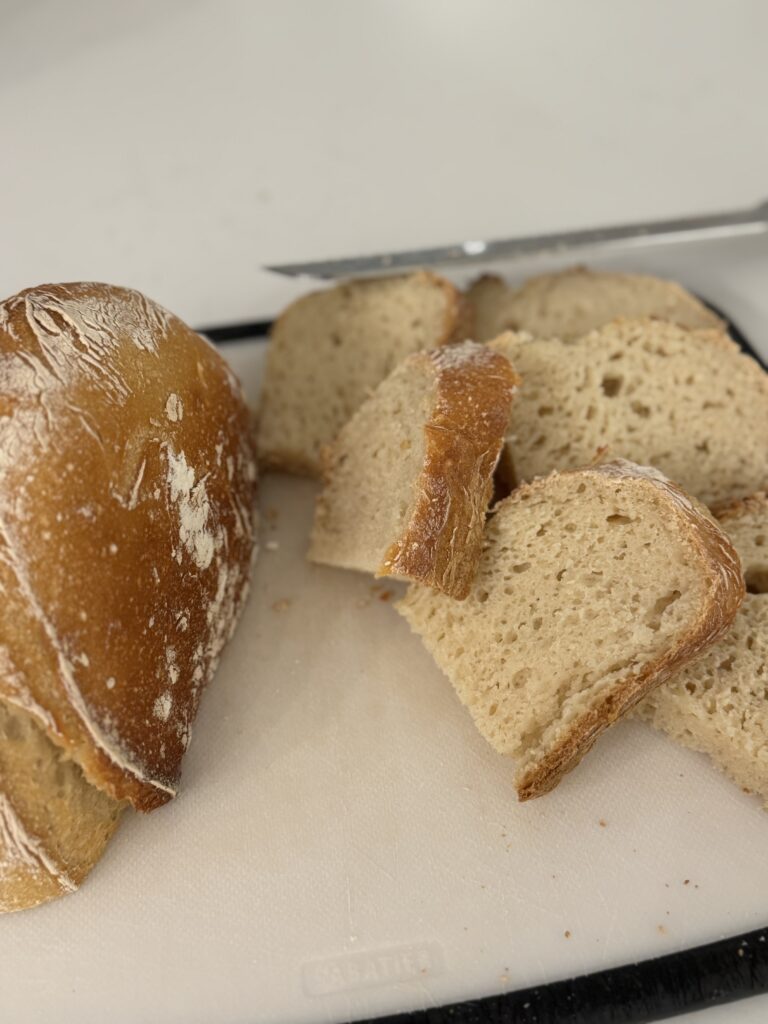
This time though, the dough felt right; the rise looked right. Even the way it moved when I handled it felt right, and when I pulled that loaf out of the oven, I could tell before I even cut into it that this time Daphne, Kiki and I nailed it.
There’s a specific joy in getting something right that you didn’t get right before, especially when it required you to approach it differently. To listen more, to rush less, and to accept that you might not know as much as you think.
I didn’t expect sourdough to feel like a metaphor but here we are. Because somewhere between learning how to feed a starter and waiting for dough to rise, I realized I might be in a similar place in my life. Things are shifting. The house is getting quieter, the rhythms are changing, and the roles I’ve held for years are starting to loosen just a bit. It’s not a bad thing. It’s just…different.
And maybe, like sourdough, it’s not something I need to muscle through or figure out on my own. Maybe it’s something I can learn again; even if that means learning from someone younger than me. Maybe even especially then.
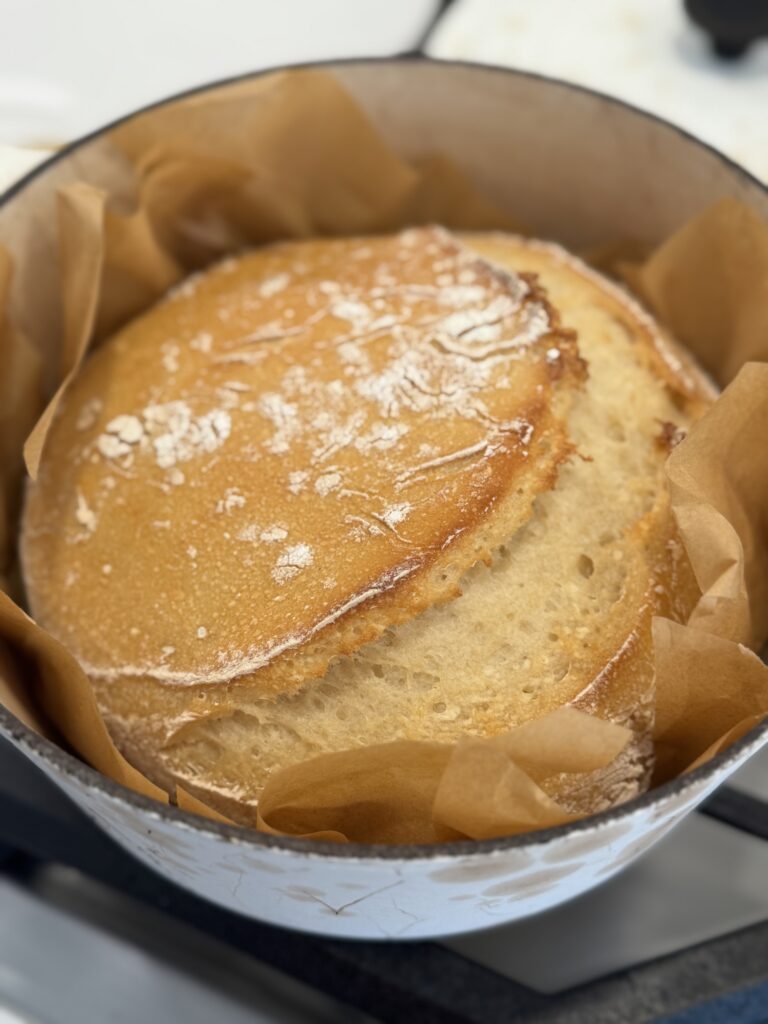
What I didn’t expect was how good it would feel to be the student. A text asking, “Does this look right?” and reassurance or a quick adjustment here or there. Kiki’s confidence made me confident. In the end, I got a picture perfect loaf of gluten-free sourdough. Crisp on the outside, soft on the inside. Turns out being taught by the next generation is kind of the best!
But even more than that, I got a reminder that starting over doesn’t have to feel like failure. Sometimes it just looks like doing something again – differently. It began with a jar of starter. And as it turns out not just for sourdough- maybe for my second act too.
WHAT I DID DIFFERENTLY THIS TIME:
If you’re here for the sourdough itself, here’s what actually made the difference for me:
-A strong, active starter (thanks, Kiki- she recommends the instructions from King Arthur) and using a kitchen scale (link below).
-Following a clear schedule (which meant texting Kiki to tell me when) instead of guessing and discovering it wasn’t that specific after all
-Letting the dough rest longer than I thought it needed (especially a cold rise, since I didn’t even know that was a thing)
-Actually trusting the process instead of trying to control it.
I have a feeling this won’t be the last thing I learn this way and I think I’m looking forward to it!
Kiki’s Perfect Gluten-Free Sourdough (makes one loaf)
Ingredients:
- 259g active starter
- 412g water (distilled recommended)
- 390g gluten-free bread flour (I use King Arthur’s)
- 12g sugar
- 10g salt
Instructions:
- Combine all ingredients in a stand mixer and mix for 5–10 minutes, scraping down the sides periodically.
- Let the dough rest for 30 minutes.
- Flour a clean surface and turn the dough out. Gently knead it into a circle using your hands. This is the moment to fold in any add-ins — jalapeños and cheese are a favorite.
- Transfer the dough to a banneton basket or a colander lined with a cotton or linen cloth dusted with flour. Cover loosely (a shower cap works perfectly).
- Proof on the counter for 2–4 hours.
- Move to the refrigerator and cold proof for 16–24 hours.
- When ready to bake, place your dutch oven in the oven and preheat to 500°F for 45 minutes. While it heats, allow your dough to come to room temperature on the counter.
- Flip the dough from the basket onto parchment paper and score the top — Kiki uses a “C” cut, which you can see on the finished loaf.
- Carefully lower the dough (with the parchment) into the hot dutch oven. Reduce the oven temperature to 450°F and bake with the lid on for 45 minutes.
- Remove the lid and bake an additional 5–15 minutes until deeply golden.
- Allow the loaf to cool for at least 2 hours before slicing — the inside is still setting! To slice, cut straight down the middle first, then lay each half cut-side down for clean, even slices.
KITCHEN TOOLS I USED:
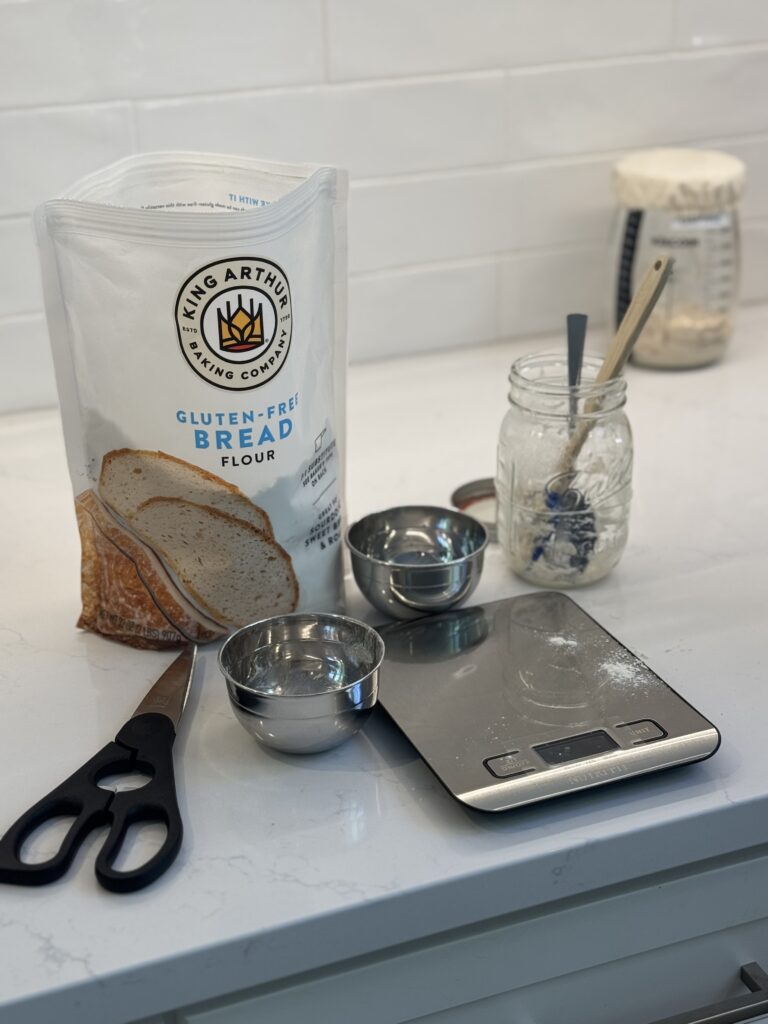
- Kitchen scale — I can’t recommend this enough; it makes all the difference
- Sourdough starter jar with lid
- King Arthur Gluten-Free Bread Flour
- This Le Creuset Dutch oven is the one I use ; mine is 25 years old and was a wedding gift! Here’s a less expensive but beautiful alternative.